






Installing A Loft Ladder and Hatch: How to Choose the Correct Option
Quick Answer: How to Choose the Correct Option When Installing A Loft Ladder and Hatch
Choosing the correct loft ladder and hatch depends on your loft access frequency, available opening size, and property type, as well as safety and insulation requirements. You should ensure the ladder type (aluminium, timber, or telescopic) suits your space and intended use, and that the hatch is properly sized and insulated for ease of access and energy efficiency. A professional survey is the best way to confirm the right combination, as it will assess your loft structure, headroom, and installation constraints before recommending the most suitable option for safe, compliant, and practical use.
If you use your loft for storage – whether it’s suitcases, seasonal decorations, or bulky items – you’ll already know that poor loft access can be inconvenient, unsafe, and inefficient. Struggling with a stiff hatch, a wobbly ladder, or a dark, draughty opening makes even a simple trip up there more effort than it should be.
A properly designed loft hatch and ladder installation changes all of that. It improves safety, insulation performance, and everyday usability, while also reducing heat loss through your ceiling – making your home more comfortable and energy efficient year-round.
This guide to installing a loft hatch and ladder explains the main types of loft hatches and loft ladders available in the UK, how they compare, and how to choose the right system for your home.
Table of Contents
- What is a Loft Hatch?
- What is a Loft Ladder?
- What Are the Different Types of Hatch Available?
- What Are the Different Types of Ladders Available?
- What Materials Are Loft Hatches Made From?
- What Materials Are Loft Ladders Made From?
- Which Loft Hatch Should I Choose?
- Which Loft Ladder Should I Choose?
- Best Overall System Pairing
- Why Use Our Professional Team For Installing a Loft Hatch and Ladder in Your Home?
- Final Thoughts
- FAQs
What is a Loft Hatch?
A loft hatch is the ceiling access point that allows entry into the loft, typically consisting of a sealed panel that opens or removes to provide safe access.
A loft hatch is the access opening installed in a home’s ceiling that allows entry into the loft space above. It is usually a framed, sealed panel that can be opened or removed to create a safe route between the room below and the loft.
In most modern UK homes, a loft hatch forms part of the building’s thermal envelope. When closed, it should sit tightly within its frame to help maintain energy efficiency and prevent warm air escaping into the loft.
Modern UK loft hatches are engineered to:
- Minimise heat loss
- Reduce draughts
- Maintain airtight sealing when closed
- Support safe access to loft storage or conversion spaces
What is a Loft Ladder?
A loft ladder is a retractable or foldable access system installed with a loft hatch, designed to provide access into the loft.
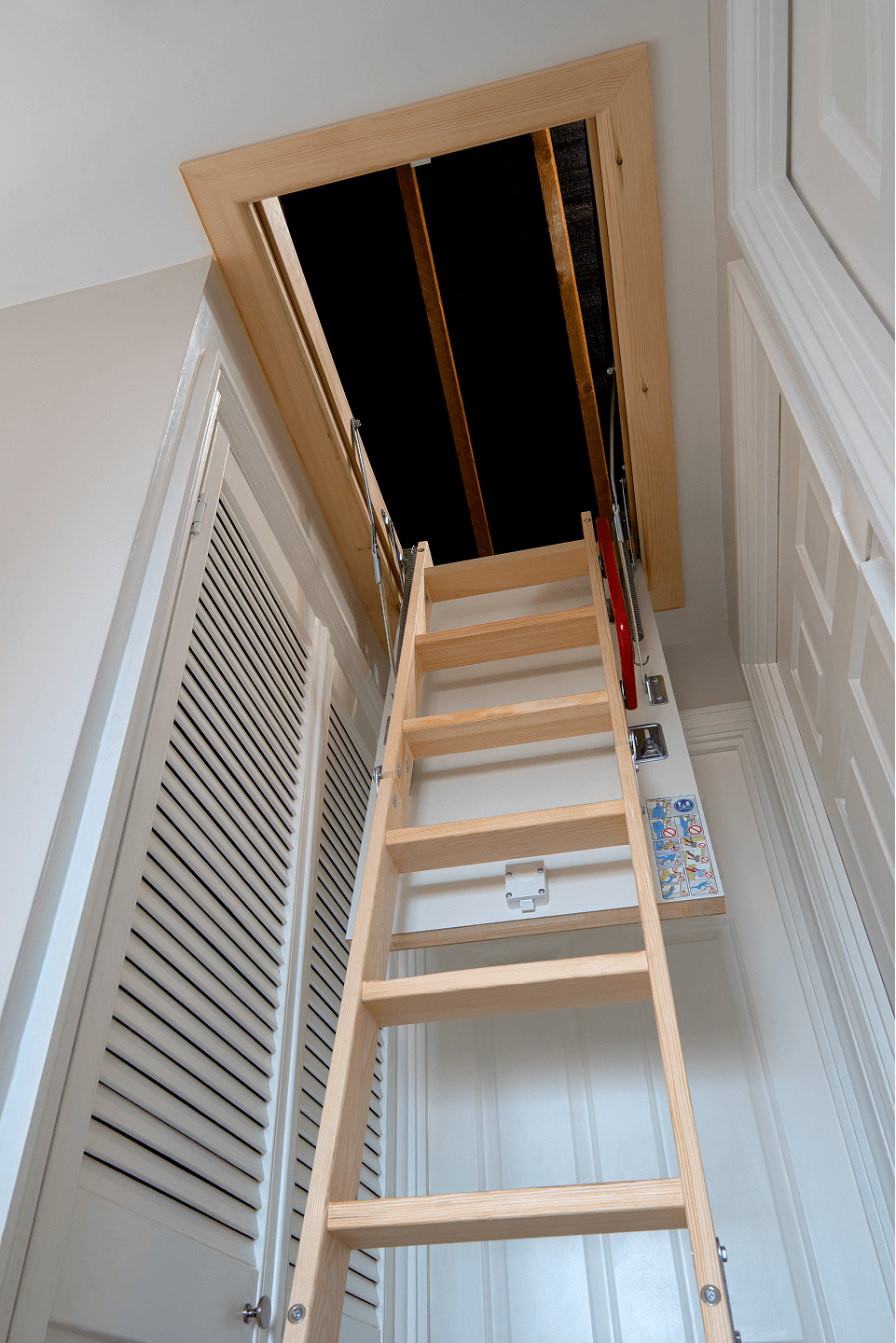
A loft ladder is a retractable or foldable ladder designed to provide safe and convenient access between a home and its loft space. It is typically installed in combination with a loft hatch and can be pulled down or unfolded when needed, then stored away neatly above the ceiling when not in use.
Loft ladders are available in different materials such as aluminium, timber, or telescopic designs, and are chosen based on available space, frequency of use, and load requirements. They are designed to make accessing the loft safer and easier compared to using standalone ladders or improvised access methods.
What Are the Different Types of Hatch Available?
There are two main types of loft hatch: hinged drop-down hatches, which offer better insulation and ease of use, and push-up hatches, which are simpler and more space-efficient.
There are two key types of loft hatch that can be installed in your home – either hinged or push-up. Both come in large and small loft hatch sizes with different features and provide an installable solution in any home.
Hinged Drop Down Hatch
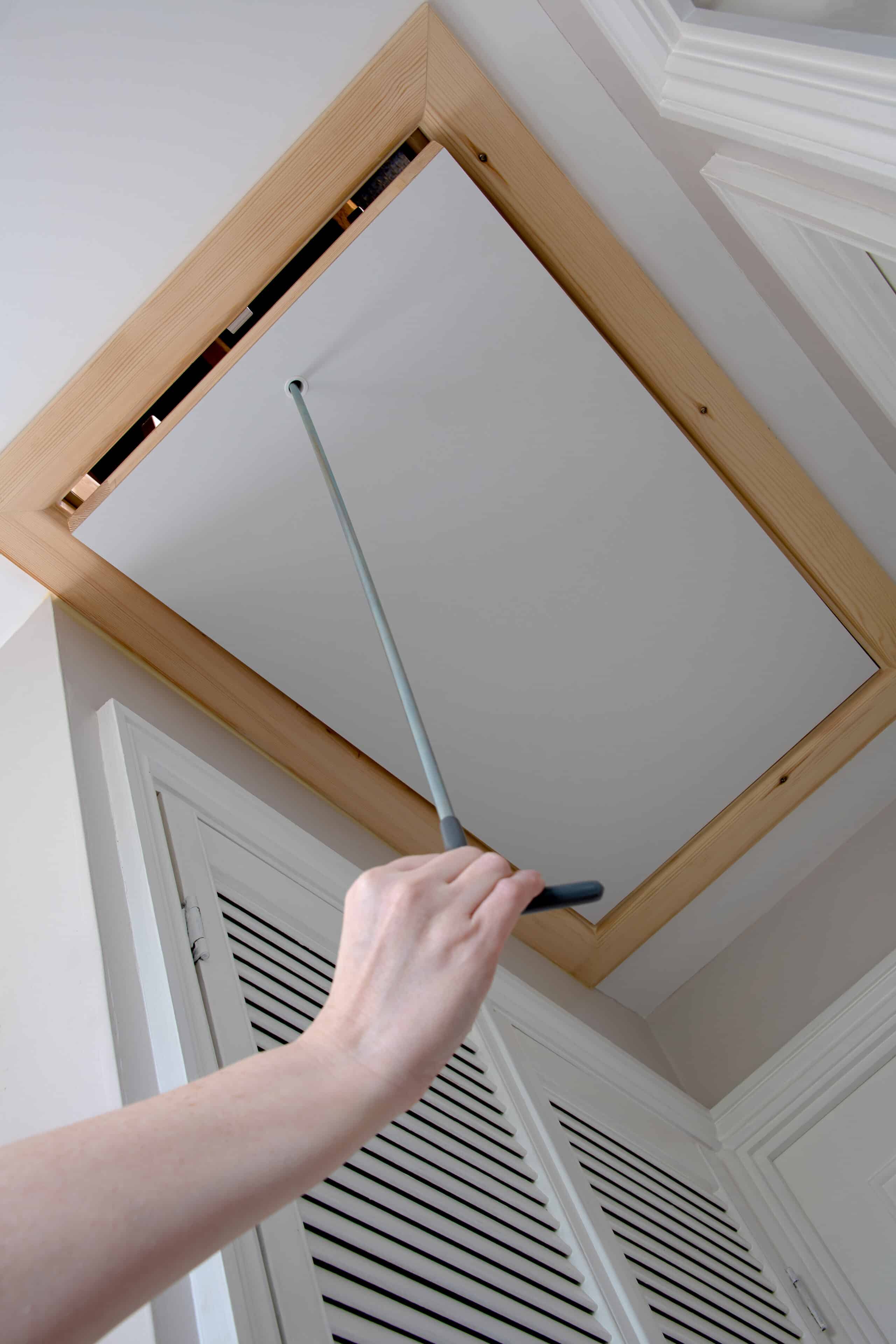
With a hinged loft hatch, the lid is opened and lowered out of the way using a pole. The hinge provides a pivot point, so when the hatch is closed, a seal is created around the door to help prevent draughts. They are an ideal option in combination with loft ladders due to their ease of operation.
Hinged Drop Down Hatch Benefits
Key benefits of a hinged drop-down loft hatch include:
- Better insulation and reduced heat loss
- Improved airtight seal to prevent draughts
- Safer and easier to open than push-up hatches
- More durable and stable over time
- Neater, more modern ceiling finish
- Works well with most loft ladders
- Easier access for regular loft use
Push Up Hatch
With push-up loft hatches, the frame is separate from the lid, meaning opening it is slightly more difficult as the door needs to be lifted up and into the loft space. They aren’t as insulated but are ideal for homeowners with less room to access the loft from below. The door is pushed up into the loft space instead of hanging down into the home.
Push Up Hatch Benefits
Key benefits of a push-up loft hatch include:
- Simple and low-cost design
- Easy to install in most properties
- Lightweight and easy to remove or lift
- Minimal moving parts, so fewer mechanical issues
- Suitable for occasional loft access
- Can be replaced or upgraded easily in the future
- Works in tight ceiling spaces where hinged systems may not fit
Loft Hatch Comparison Table
| Feature / Aspect | Hinged Drop Down Hatch | Push Up Hatch |
| Opening method | Opens downward on a hinge and is lowered using a pole | Lifted up and pushed into the loft space |
| Seal quality | Tight sealed frame reduces draughts | Less airtight compared to hinged systems |
| Insulation performance | Better insulation and reduced heat loss | Typically less insulated |
| Ease of use | Easier and safer to operate, especially with a loft ladder | Can be harder to lift and position manually |
| Safety | More stable and controlled opening/closing | Requires lifting overhead, less controlled |
| Durability | More robust and long-lasting mechanism | Simple design with fewer components |
| Maintenance | Low maintenance with stable fittings | Very low maintenance due to simple structure |
| Best use case | Regular loft access and storage use | Occasional access or limited space installations |
| Ceiling finish | Cleaner, more modern integrated look | Basic, functional finish |
| Space requirements | Requires sufficient space for drop-down movement | Suitable for tight ceiling spaces |
What Are the Different Types of Ladders Available?
The main loft ladder types are sliding, concertina-style, and telescopic ladders, each designed for different space, access frequency, and usability requirements.
There is a wide range of different loft ladders available, but to know which design best suits your situation, we’ll first need to measure the height from the floor where the feet of your ladder will rest to the top of your loft floor above. This includes the top of the StoreFloor boards if you mount the ladder on the raised floor system.
Sliding Loft Ladders
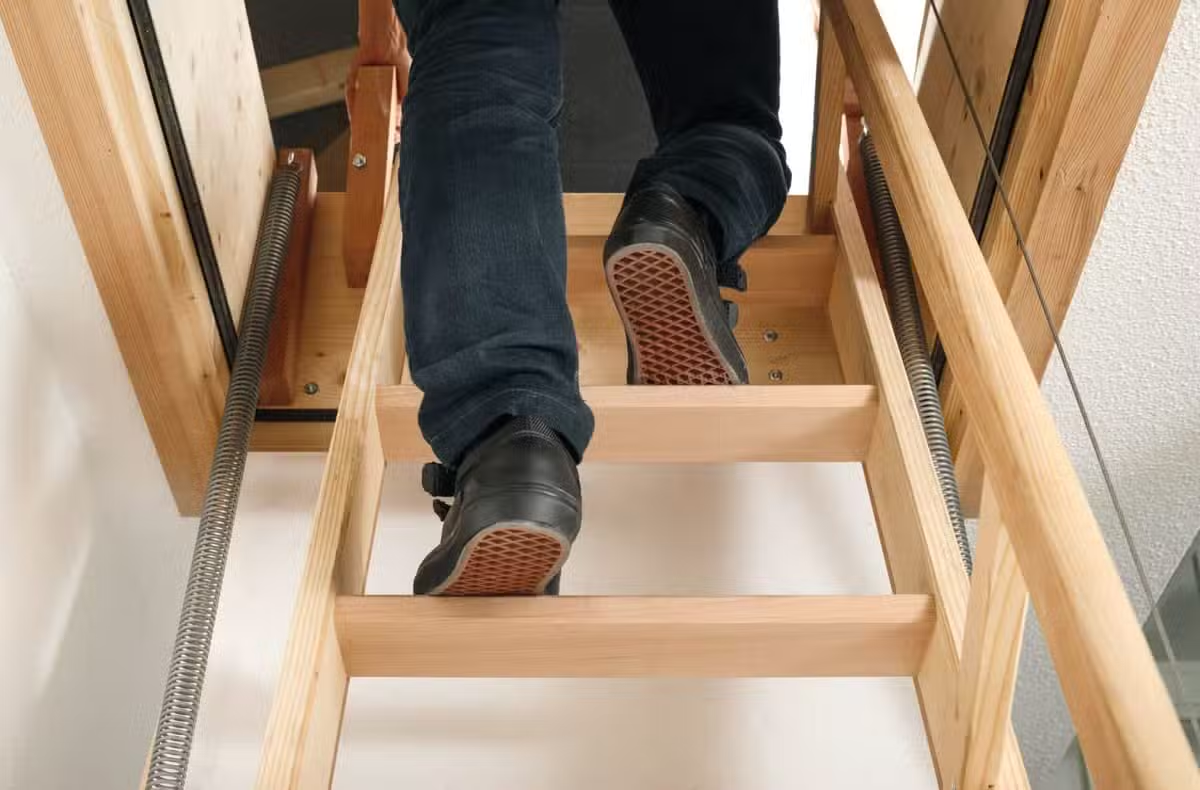
This ladder-style is simple to install and works with most sizes of loft hatch. Typically split into 2 or 3 sections that can be extended down to the floor, sliding loft ladders are an effective solution for getting into your loft safely and conveniently as they are lightweight and easy to operate.
Sliding Loft Ladder Benefits
A sliding loft ladder is a compact access solution that extends and retracts smoothly to provide safe entry into the loft while saving space when not in use.
- Smooth sliding mechanism for easy operation
- Compact design ideal for limited loft access space
- Stores neatly without taking up floor area
- Quick to deploy when access is needed
- Lightweight and easy to handle
- Suitable for occasional loft use
- Works well in smaller or tighter hatch openings
Concertina-style Loft Ladders
This style of loft ladder is ideal for houses with a small ceiling opening and limited loft space, as they are compact and stored directly above the hatch, which allows for extra floor space to be used inside.
Concertina-style Loft Ladder Benefits
A concertina-style loft ladder folds away in a compact “accordion” design, making it ideal for homes where space is limited but regular loft access is needed.
- Extremely compact when folded away
- Ideal for tight or narrow loft openings
- No large swing space required for operation
- Smooth pull-down and fold-up mechanism
- Strong and stable once fully extended
- Suitable for frequent loft access
- Space-saving design keeps ceiling area clear
Telescopic Loft Ladders
These small loft hatch ladders can collapse down into a compact size for easy compact storage. They are manufactured with tough working conditions in mind, making them suitable for both home and commercial use.
Telescopic Loft Ladder Benefits
The telescopic option is the perfect loft ladder for small hatches and extends section by section like a sliding tube system, offering a compact and highly practical solution for accessing loft spaces.
- Very compact when fully retracted
- Easy to extend and adjust to full height
- Lightweight yet strong construction
- Minimal storage space required in the loft hatch area
- Quick and simple to deploy and stow away
- Suitable for modern homes with limited space
- Good stability when fully locked in position
Loft Ladder Comparison Table
| Feature / Aspect | Sliding Loft Ladder | Concertina-Style Loft Ladder | Telescopic Loft Ladder |
| Design type | 2–3 section ladder that slides down to the floor | Accordion-style folding ladder stored above the hatch | Sectional ladder that extends like a telescope |
| Space requirements | Requires floor space when extended | Minimal floor space required | Very minimal space required |
| Storage position | Slides into loft when not in use | Folds compactly directly above hatch | Collapses into a compact unit above hatch |
| Ease of use | Simple, smooth sliding operation | Pull-down and fold-out mechanism | Quick extend and lock system |
| Installation compatibility | Works with most standard loft hatches | Best for smaller or tighter hatch openings | Suitable for modern compact installations |
| Stability | Stable when fully extended | Very stable once locked in place | Strong and secure when fully extended and locked |
| Weight & handling | Lightweight and easy to operate | Moderate weight, balanced folding design | Lightweight but engineered for strength |
| Best use case | Occasional, simple loft access | Regular use with limited space | Frequent use where compact storage is needed |
| Key advantage | Straightforward operation | Extremely space-efficient | Maximum compactness with strong stability |
What Materials Are Our Loft Hatches Made From?
Loft hatches are commonly made from timber or MDF, though modern insulated UPVC hatches offer improved energy efficiency and airtight sealing.
Most loft hatches are made using cheap cuts of wood or MDF, with hinges screwed in. While this is a quick and cheap option that many loft hatch installers will opt for, it’s not the only choice and by no means the best.
Traditional Timber & MDF Hatches
Traditional loft hatches are commonly constructed using timber or MDF (medium-density fibreboard) and are typically found in older properties or lower-cost installations. While they remain functional, they are now considered a basic solution compared to modern insulated alternatives. Older or budget installations often use timber or MDF construction.
- Lower cost
- Basic insulation
- More prone to draughts over time
Insulated UPVC Loft Hatches (Modern Standard)
Insulated UPVC loft hatches represent the current industry standard for modern loft hatch installation in UK homes, particularly where energy efficiency and compliance with current Building Regulations are a priority.
Unlike traditional timber or MDF hatches, these systems are purpose-built to reduce heat transfer and improve airtightness at one of the most common weak points in a home’s thermal envelope: the loft access point.
- High thermal efficiency
- Airtight sealing system
- Improved durability
- Reduced heat loss through ceiling void
- Better long-term performance
At Instaloft, we have completed over 71000 installations and only provide industry-leading energy-efficient UPVC hinge-down loft hatches that meet all current building regulation requirements – such as TrustMark and HNBC warranties. This means they are adequately sealed and insulated to help prevent heat transfer in the home, preventing warmth from escaping from the living space into the loft or cold air from the roof coming down into the living space.
Once you’ve decided on a new loft hatch style, we’ll need to measure up the opening size as they are not all uniform, and some hatches may not fit at first.
If this is the case, you may need a frame installed around the edge of the opening, or the opening might need to be re-cut to suit the hatch. We will enlarge your existing loft opening and install a new energy-efficient hatch.
What Materials Are Our Loft Ladders Made From?
Loft ladders are typically made from aluminium for lightweight ease of use or timber for a more stable and traditional feel.
Loft ladders are typically manufactured in either aluminium or timber, and each material offers different performance and aesthetic benefits depending on how the loft is used.
Aluminium Loft Ladders
Aluminium ladders are lightweight, easy to operate, and low maintenance. They are ideal for occasional loft access where convenience and ease of use are priorities. Their reduced weight also makes them easier to extend and retract.
Timber Loft Ladders
Timber ladders offer a more solid and traditional feel, with increased stability and a strong visual finish. They are often preferred for more frequent loft use, where sturdiness and a more substantial structure are important.
Which Loft Hatch Should I Choose?
The right loft hatch depends on three main factors: how often you use your loft, how much space you have, and how important energy efficiency is in your home. In the UK, most homes fall into a fairly predictable set of use cases, so choosing can be made quite straightforward once these are clear.
If energy efficiency is your priority: Hinged Drop-Down Insulated Loft Hatch
Choose this option if you want the best thermal performance and airtight sealing. This option is best for:
- Homes with noticeable heat loss through the ceiling
- Regular loft use (storage or conversion access)
- Improving EPC performance or reducing heating bills
Why it’s the best choice:
A hinged drop-down hatch forms a tight seal within a frame, reducing draughts and limiting warm air escape into the loft void. Modern insulated versions (typically UPVC) significantly outperform older timber or push-up designs.
In short: Best all-round option for most modern UK homes.
If you only use your loft occasionally: Push-Up Loft Hatch
This is the simplest and most cost-effective option. This option is best for:
- Occasional loft access (seasonal storage)
- Budget installations
- Properties where insulation upgrades are not a priority
Why choose it:
It has fewer moving parts and is quick to install, but it generally provides weaker insulation and a less airtight seal compared to hinged systems.
In short: Functional and affordable, but not ideal for energy-conscious upgrades.
If you have limited ceiling space: Compact or Push-Up System
Space constraints often determine the choice more than preference. This option is best for:
- Small hallways or tight landing areas
- Low ceiling clearance around the access point
- Older properties with restricted loft openings
Why it works:
Push-up or compact framed systems avoid the need for a drop-down swing area, making them practical where hinged systems physically won’t operate efficiently.
In short: A practical solution when space is the limiting factor.
If you’re upgrading the loft for regular use: Insulated Hinged Hatch
This is the most future-proof option. This option is best for:
- Frequent loft access
- Homes upgrading insulation or storage systems
- Properties combining hatch with a loft ladder system
Why it’s preferred:
It integrates better with modern loft ladders, improves safety, and maintains consistent insulation performance across the ceiling line.
In short: The recommended standard for most modern installations.
Quick Decision Summary
- Best overall performance: Hinged insulated loft hatch
- Best budget option: Push-up loft hatch
- Best for tight spaces: Push-up or compact system
- Best for frequent use: Hinged drop-down insulated system
Which Loft Ladder Should I Choose?
The best loft ladder depends on how often you access your loft, available space around the hatch, and how much stability you need when carrying items. In the UK, most homes fall into one of three practical ladder choices.
Best overall for most homes: Sliding Loft Ladder
A sliding loft ladder is the most common and generally the best all-round option. This option is best for:
- Regular but not daily loft access
- Carrying boxes and household items
- Standard UK loft openings
Why choose it:
It uses 2–3 sections that slide into place, making it simple, stable, and cost-effective. It’s widely compatible with most loft hatches and offers a good balance of safety and ease of use.
In short: Best general-purpose loft ladder for most homes.
Best for very small spaces: Concertina Loft Ladder
If space is tight, this is the most compact solution. This option is best for:
- Narrow hallways or restricted landing areas
- Small or awkward loft openings
- Maximising loft storage space
Why choose it:
It folds in an accordion style and stores within the hatch opening, meaning it takes up almost no loft floor space. It’s especially useful where other ladders physically won’t fit.
Trade-off: More expensive and can feel less rigid than sliding ladders.
Best for modern compact setups: Telescopic Loft Ladder
A telescopic ladder is the most space-efficient “modern” option. This option is best for:
- Very limited storage space
- Occasional but convenient access
- Modern insulated hatch systems
Why choose it:
It extends section by section like a compact tube system and stores extremely neatly above the hatch. It’s lightweight and easy to deploy, but stability varies by model quality.
Trade-off: Can feel less solid than sliding or timber options of low quality.
Best for frequent or heavy use: Concertina or heavy-duty sliding system
If you regularly go into your loft with items. This option is best for:
- Frequent access (weekly or more)
- Carrying heavier loads
- Long-term durability
Why choose it:
Concertina ladders offer strong compact design, while heavy-duty sliding ladders provide better rigidity and stability under load.
Trade-off: Higher cost, more complex installation
Quick Decision Summary
- Best overall: Sliding loft ladder
- Best for small spaces: Concertina ladder
- Best for ultra-compact storage: Telescopic ladder
- Best for frequent/heavy use: Heavy-duty sliding or concertina
Best Overall System Pairing
If you are looking at installing a loft ladder and hatch option, which should you go for? Well in our experience, we believe the best option is the:
Hinged Insulated Loft Hatch + Sliding Loft Ladder
When looking at installing loft ladder and hatch pairings, this combination is widely regarded as the most effective “all-round” loft access system for typical UK residential properties. It is commonly installed in both retrofit and new-build scenarios because it delivers a strong balance of thermal performance and everyday usability without requiring specialist structural changes.
Why Use Our Professional Team For Installing a Loft Hatch and Ladder in Your Home?
At Instaloft, we specialise in professionally installing loft ladders and loft hatches designed to improve safe access, energy efficiency, and everyday usability within the home. Whether you are upgrading an older loft access system or installing a completely new hatch and ladder setup, our installations are designed around long-term performance, safety, and convenience.
With over 71,000 completed installations across the UK, our team understands that every property is different. Ceiling construction, loft opening size, available landing space, insulation requirements, and how frequently the loft is used all influence the most suitable solution. Our approach focuses on recommending loft access systems that work practically within the home while maintaining a clean, professional finish.
Benefits of Our Professionally Installed Loft Ladders & Hatches
A professionally installed loft ladder and hatch improves safe access to the loft, enhances energy efficiency, and makes the loft space far easier and more practical to use on a daily basis.
Installing a loft ladder and hatch provides a range of practical and long-term benefits, making loft access safer, more convenient, and more efficient for homeowners who regularly use their loft for storage or additional space.
- Safer loft access – Provides a secure and stable way to access the loft compared to temporary or standalone ladders.
- Improved ease of use – Makes accessing stored items quicker, easier, and more convenient for everyday use.
- Better energy efficiency – Modern insulated loft hatches help reduce heat loss and improve airtightness around the ceiling opening.
- Reduced draughts – Professionally fitted hatch systems create a tighter seal to help prevent cold air movement between the loft and living space.
- Improved home organisation – Easier loft access encourages more effective use of loft storage, helping reduce clutter in the home.
- Space-saving storage solution – Fold-away ladder systems store neatly above the hatch without taking up valuable floor space.
- Enhanced property appeal – Safe and practical loft access can improve the functionality and attractiveness of a property to potential buyers.
- Long-term durability – Professionally installed loft ladders and hatches are designed for reliable, long-lasting performance with minimal maintenance.
What Happens When Using InstaLoft For Your Loft Ladder And Hatch Installation?
Installation typically takes 2 to 4 hours on-site, with additional time for survey, planning, and scheduling.
Pre-Installation
- Survey & quote (30–60 minutes, booked in advance) – Your loft opening, ceiling structure, and access requirements are assessed, and a price is provided.
- Booking & scheduling (same day to 1–3 days) – Your installation day is confirmed.
Installation Day
- Final measurements & marking (30–60 minutes) – The hatch position and ladder layout are confirmed on the day.
- Opening preparation (30–90 minutes) – The loft opening is enlarged or repositioned if required, and the frame is fitted securely.
- Hatch & ladder installation (1–2 hours) – The insulated hatch and ladder system are fitted and aligned.
- Safety & quality checks (30–60 minutes) – Operation, stability, and finish are inspected.
- Clean-up & final inspection (30–60 minutes) – The area is cleared and final checks completed. Your new loft access is ready to use straight away.
Final Thoughts
Having a professional install a loft hatch and ladder in your home ensures safe, efficient and long-term access to your loft. Need help getting a loft hatch and ladder to your home? Get in touch to see how we can assist you by installing loft ladder and hatch solutions in your home and see the full range of optional extras we offer to help increase the safety of your new loft storage space. Join 71,000 customers today!
Loft Hatch & Ladder FAQs
What is a loft ladder used for?
A loft ladder provides safe and convenient access between your home and loft space, folding or retracting away when not in use.
What types of loft hatches are available?
The two main types are push-up hatches and hinged drop-down hatches, with hinged versions offering better insulation and ease of use.
What types of loft ladders are available?
Common options include sliding, concertina-style, and telescopic loft ladders, each suited to different space and usage needs.
Which loft ladder material is best?
Aluminium is lightweight and easy to use, making it ideal for occasional access, while timber offers greater stability and a more traditional, solid feel.
Do I need both a loft hatch and a loft ladder?
Not always, but installing a loft hatch and ladder is usually done together to provide safe, practical access to the loft space.
Can I upgrade my existing loft hatch or ladder?
Yes, most loft hatches and ladders can be upgraded to improve insulation, safety, and ease of access.